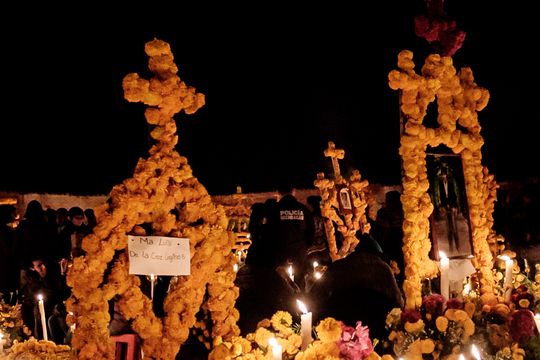
The churchyard cemetery of Arocutin at night. A whitewashed church with a lit doorway and a bell tower, a tall cross of marigolds beside it, and hundreds of candles and orange flowers on the graves, with families gathered among them.

La Otra Lado

Noche de las Ánimas at Lake Pátzcuaro, Michoacán. November 1 into November 2, 2016. Photographs by Robear Alcantar.

La Otra Lado is one night at Lake Pátzcuaro, where the families of Arocutin keep watch with their dead, and the fifteen days around it. I went to be present, and to show respect to a community that still fills that churchyard every November, and to the ancestors they are calling home.

How the
Night Was Kept

We came as guests. The families set the tone, and we kept it with them.

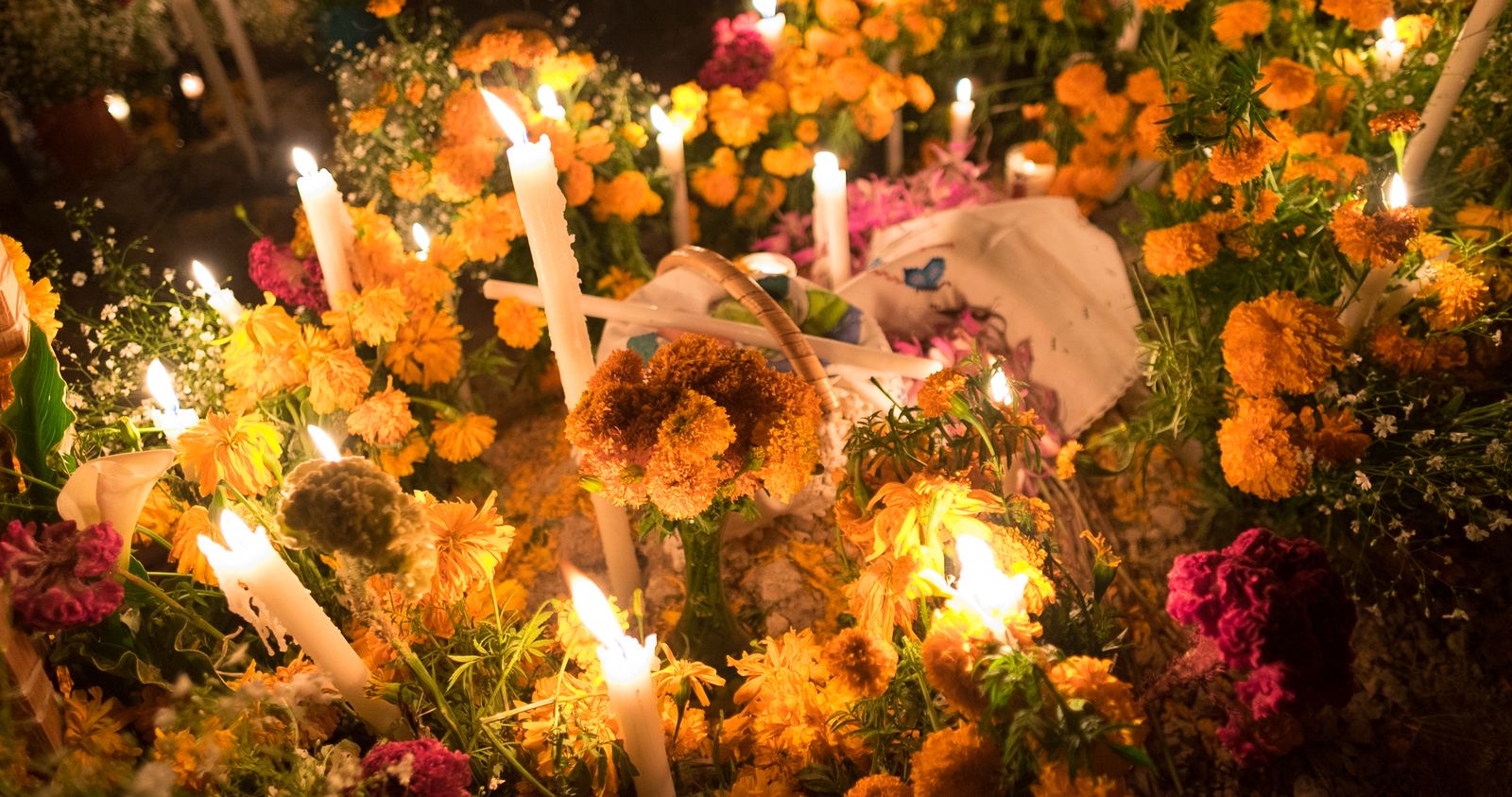
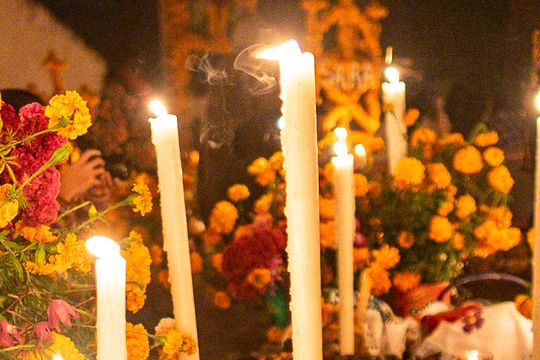
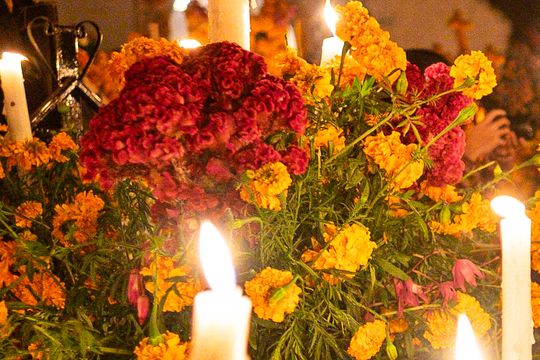
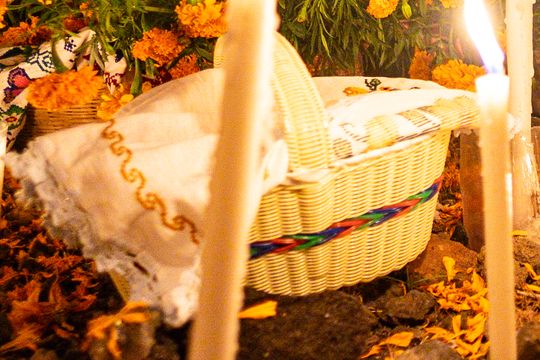
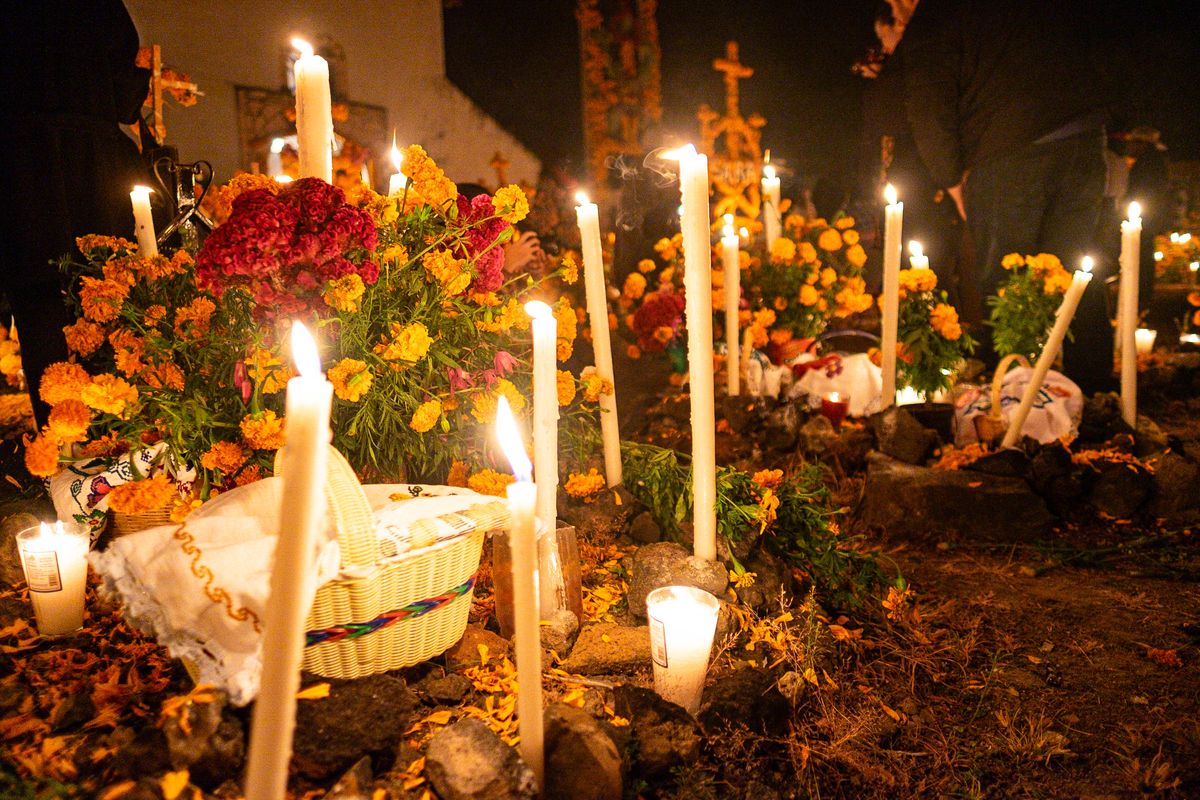
Graves at night under marigolds, magenta cockscomb and white candles. A basket covered with a cloth embroidered with a blue butterfly sits among the flowers.

Build the Ofrenda

Earth, Flowers,
and Fire

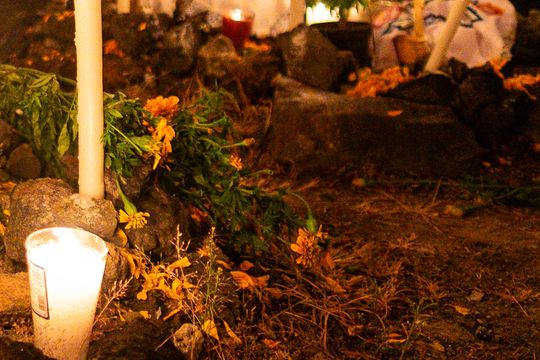
  • Dark stones around a grave of bare earth, with a candle burning in a glass.

    Earth

    Dug into the ground and ringed with stones.

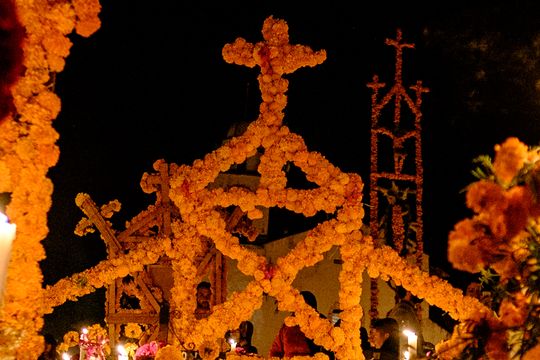
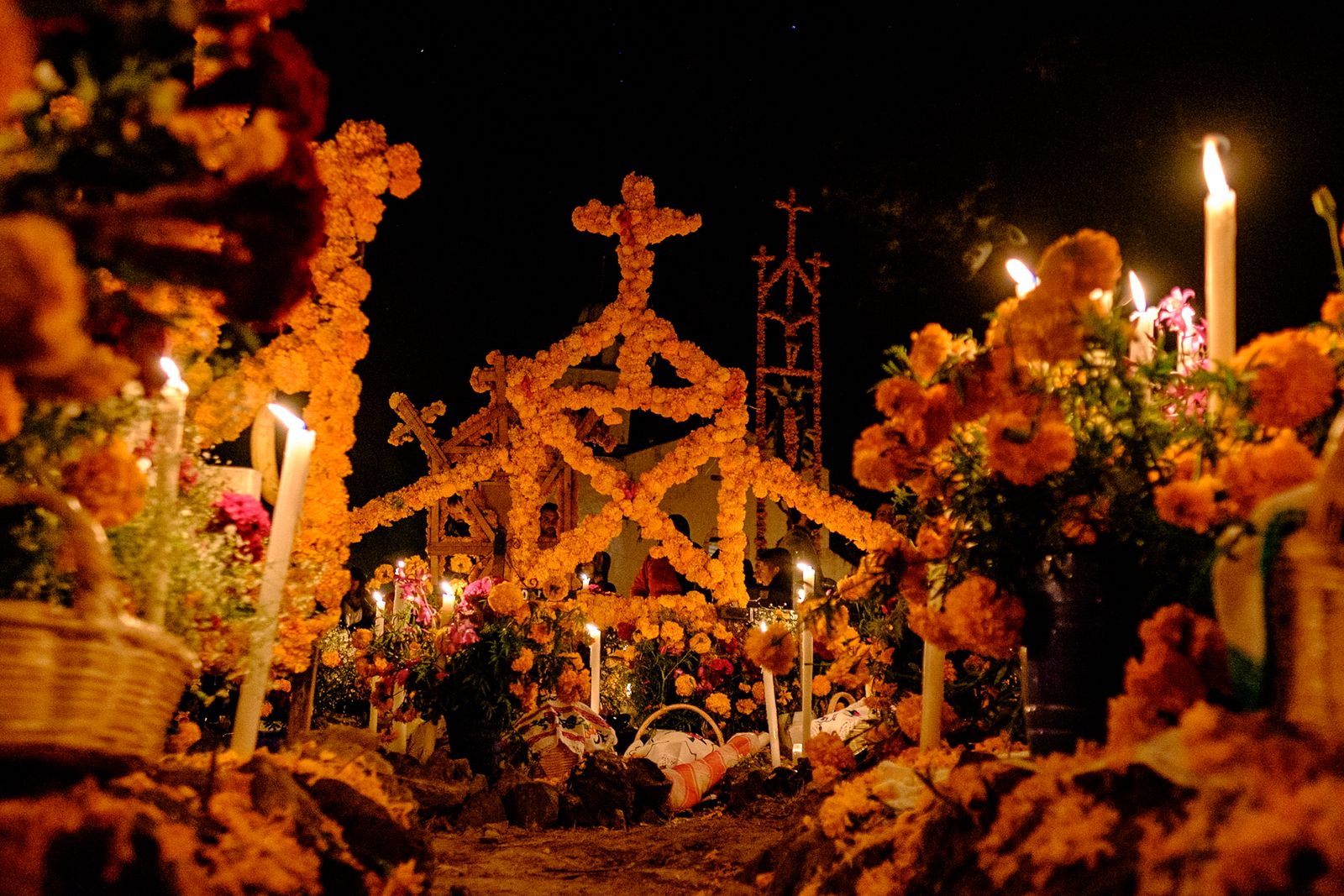
  • A cross and its braces covered in marigolds against the night sky.

    Cross

    Wood and cane, dressed in cempasúchil.

  • Tall white candles burning among marigolds.

    Light

    Tall white candles, dozens to a grave.

  • Magenta cockscomb and orange marigolds in candlelight.

    Color

    Marigold and magenta cockscomb.

  • A woven basket under a white cloth with embroidered edges.

    Food

    Bread and fruit in a basket, under an embroidered cloth.

  • A marigold cross with a small hand-lettered paper sign, and beside it a marigold frame holding a photograph.

    Name

    A photograph, or a sign lettered by hand.

The family builds it, in the daylight hours before.

Relatives agree on the design, and a senior relative usually proposes it. On October 31 the village raises an arch of tree trunks and marigolds at the cemetery gate, the doorway the souls come through, and rings the church bell to call them home. By dark the whole churchyard is orange.

A grave at night: tall white candles, marigolds and deep red cockscomb, and a woven basket under an embroidered cloth, on earth ringed with stones.
The real thing. Arocutin, the night of November 1.

La Noche

Arocutin, the night of November 1 into November 2. Five photographs. Press Listen for what I said about each when I showed them, ten years on.

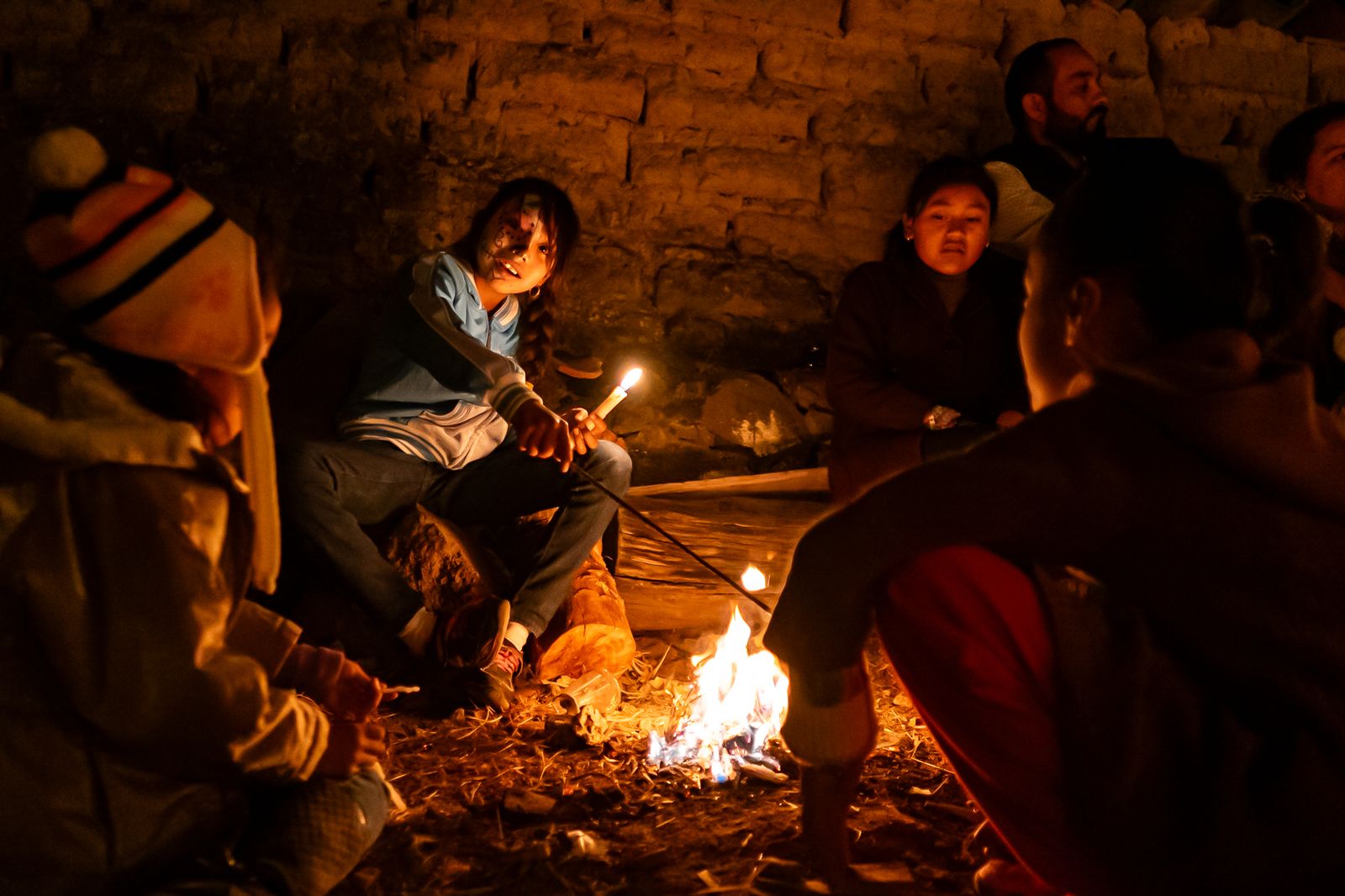
Children and adults sit around a small fire against an adobe wall at night. A girl with a painted face holds a candle and a stick over the flames.

Los niños. The kids.

“Día de los Muertos is two days, November 1st and 2nd. So these people and these families come out, and they are there all night. They bring stuff for fires, and they are out there, enjoying and being with their ancestors.”

Crosses covered in marigolds stand over graves crowded with tall candles, baskets and flowers at night.

Las cruces. The crosses.

“But all these emotions of life and death and love and loss, and how you deal with it, and how you see the joy in it, and the beauty in it. And it is essential to feel all parts of that.”

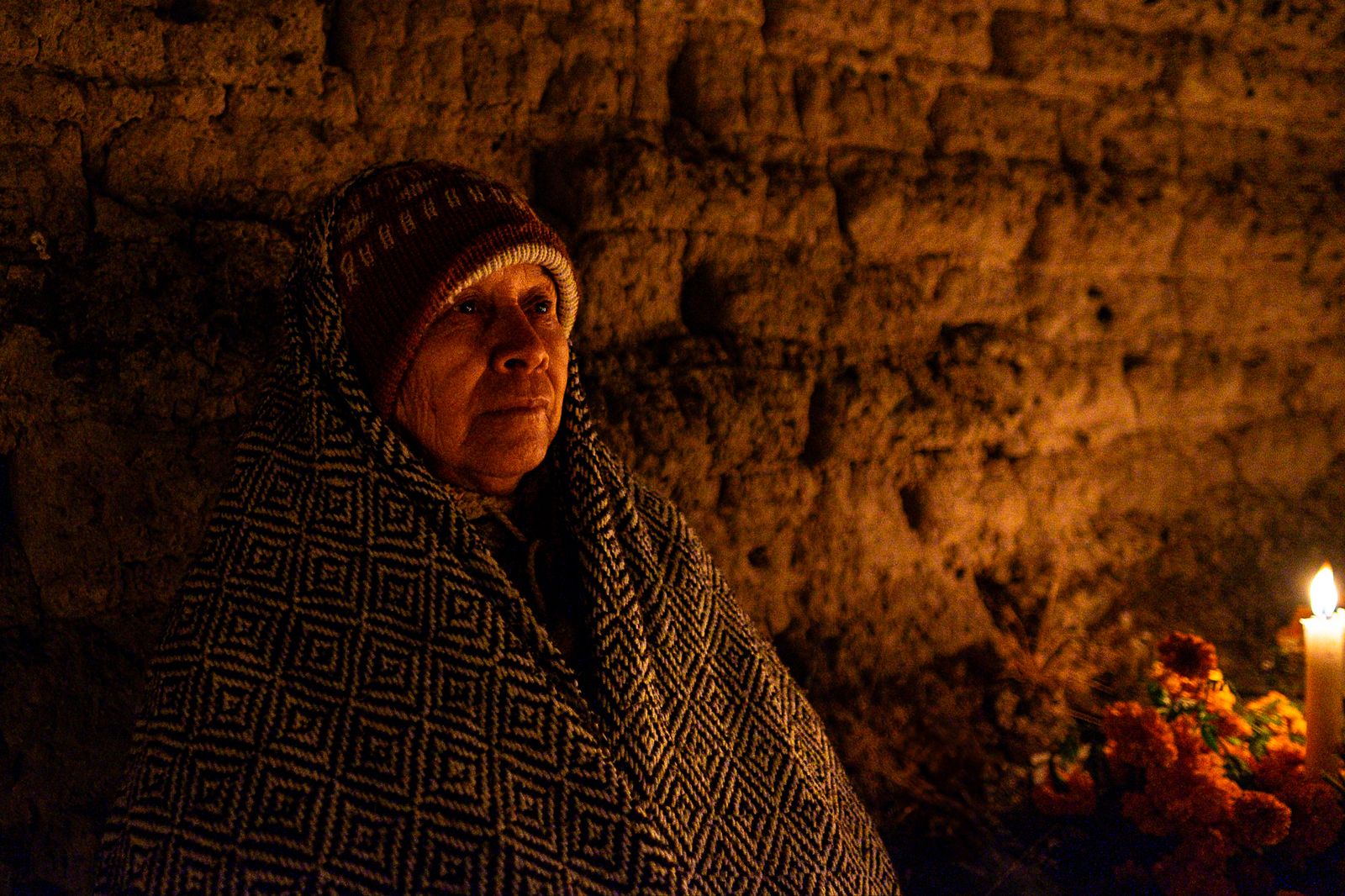
An older woman wrapped in a patterned wool blanket and a knit hat sits against an adobe wall, looking into the dark. A candle and marigolds glow beside her.

La abuela. The grandmother.

“Slowing down, and seeing people in their reflections and their moments of reflection. It was very special to me.”

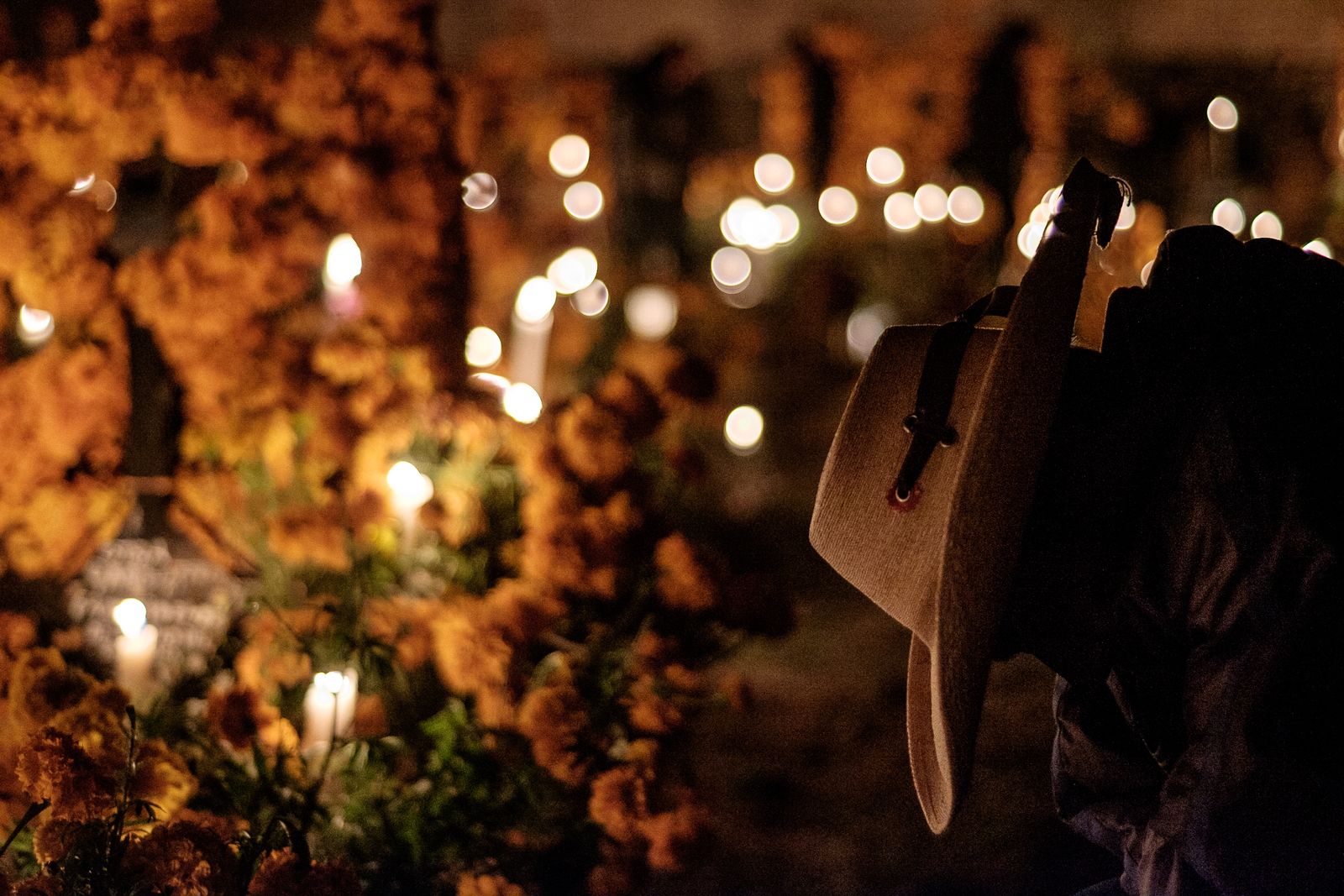
A man seen from behind with his head lowered and his straw hat tipped forward, in front of out-of-focus candles and marigolds.

El sombrero. The hat.

“You know, sometimes loss is heavy, and it needs time to breathe.”

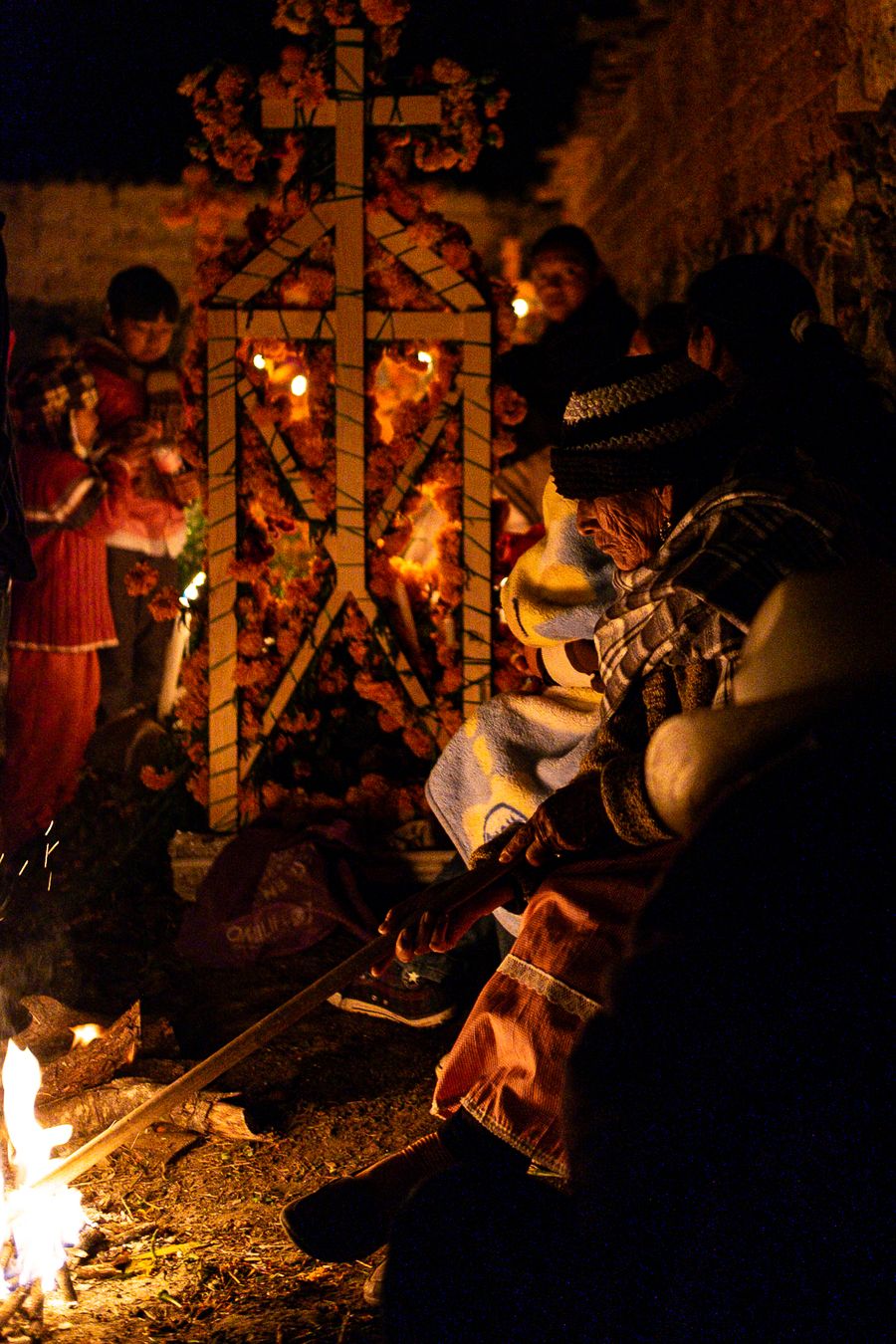
An old woman in a knit hat and a plaid shawl sits low beside a fire, holding a long stick to the flames. Behind her stands a tall cross dressed in flowers and candles, with a family close around it.

La lumbre. The fire.

“In the foreground, you have this older woman who's tending to the fire. And again, very serious, and taking in the moment, and understanding all these different feelings that come with loving and loss and remembering. And you see in the background all the families there with her.”

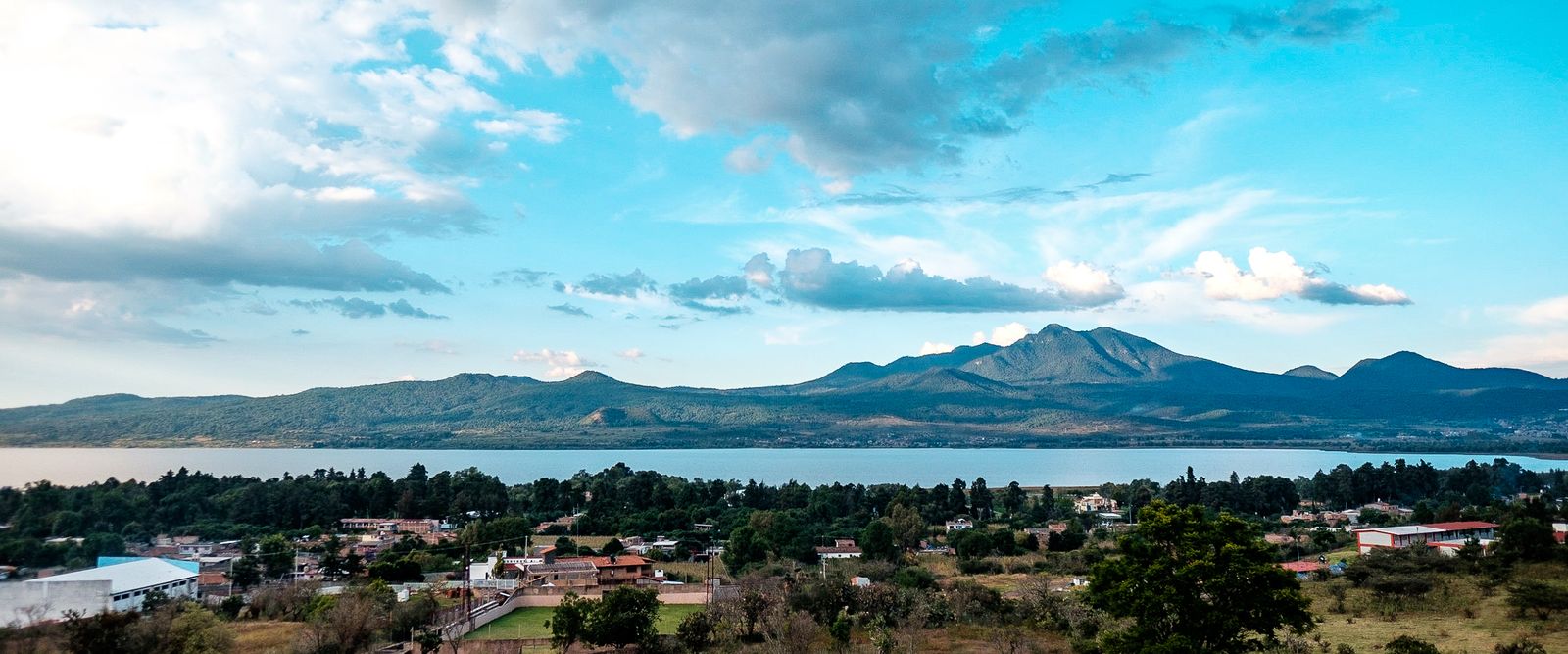
Lake Pátzcuaro seen from a hillside above Tzintzuntzan: a red-roofed town, the water, and blue mountains under tall clouds.

Around
the Lake

The night was Arocutin. The days on either side were Pátzcuaro, the old capital, the copper town, and the island.

Lake Pátzcuaro from the yácatas of Tzintzuntzan, October 30.

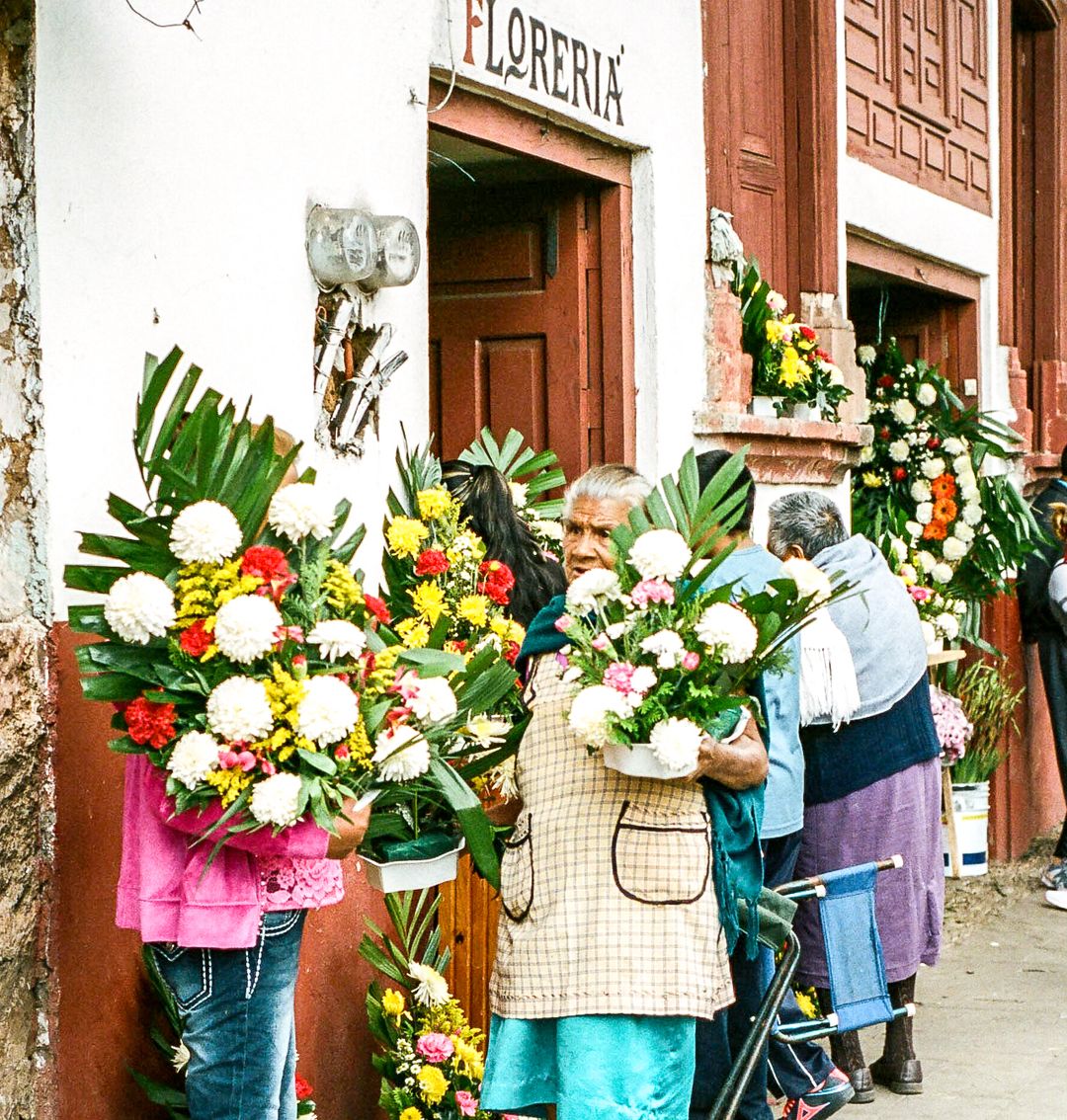
Women carry armfuls of flowers past a shop in Pátzcuaro. FLORERÍA is hand-painted above the door, on a white wall with a deep red base.

Pátzcuaro

The hub. We stayed here and worked outward. Flower trucks came in at first light on October 31. The walls are white over deep red, and the signs are painted by hand: black letters, the first letter of each word in red.

Photographed on film. In Pátzcuaro it is now --:--.
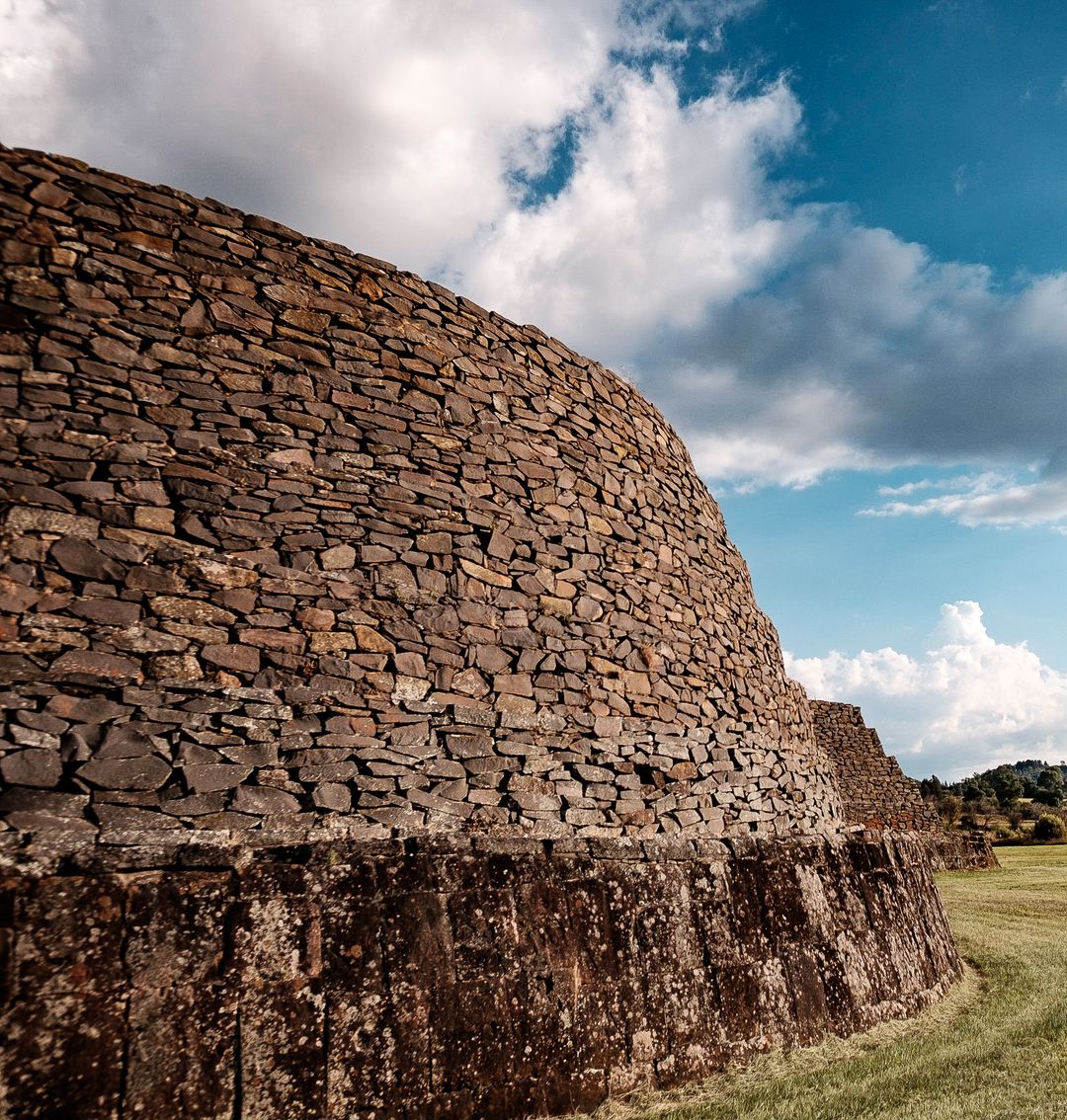
The curved, stepped stone wall of a yácata at Tzintzuntzan under a bright sky.

Tzintzuntzan

The old P'urhépecha capital, on a hillside above the lake. Five rounded pyramids, the yácatas, face the water. There was a power to the design, a circular energy that radiated out of it.

October 30.

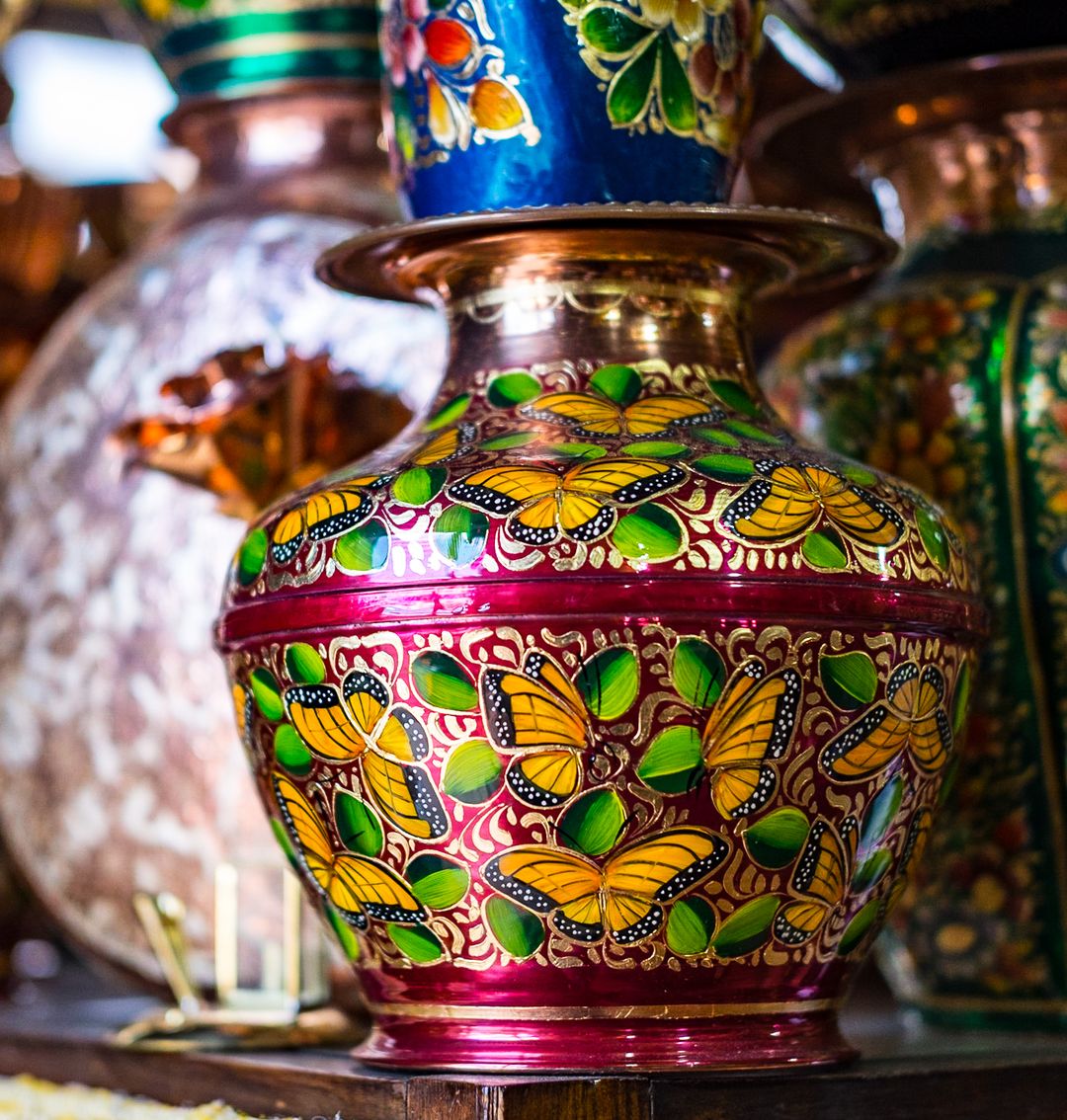
Painted copper vases in Santa Clara de Cobre, the nearest covered in monarch butterflies and green leaves on a deep red ground.

Santa Clara de Cobre

The copper town, south of Pátzcuaro. We were here at midday on November 1, hours before the vigil. This vase carries monarchs, the butterflies that fly from the north to Michoacán each fall. I am from Michigan. Seeing the other end of that migration was powerful to me.

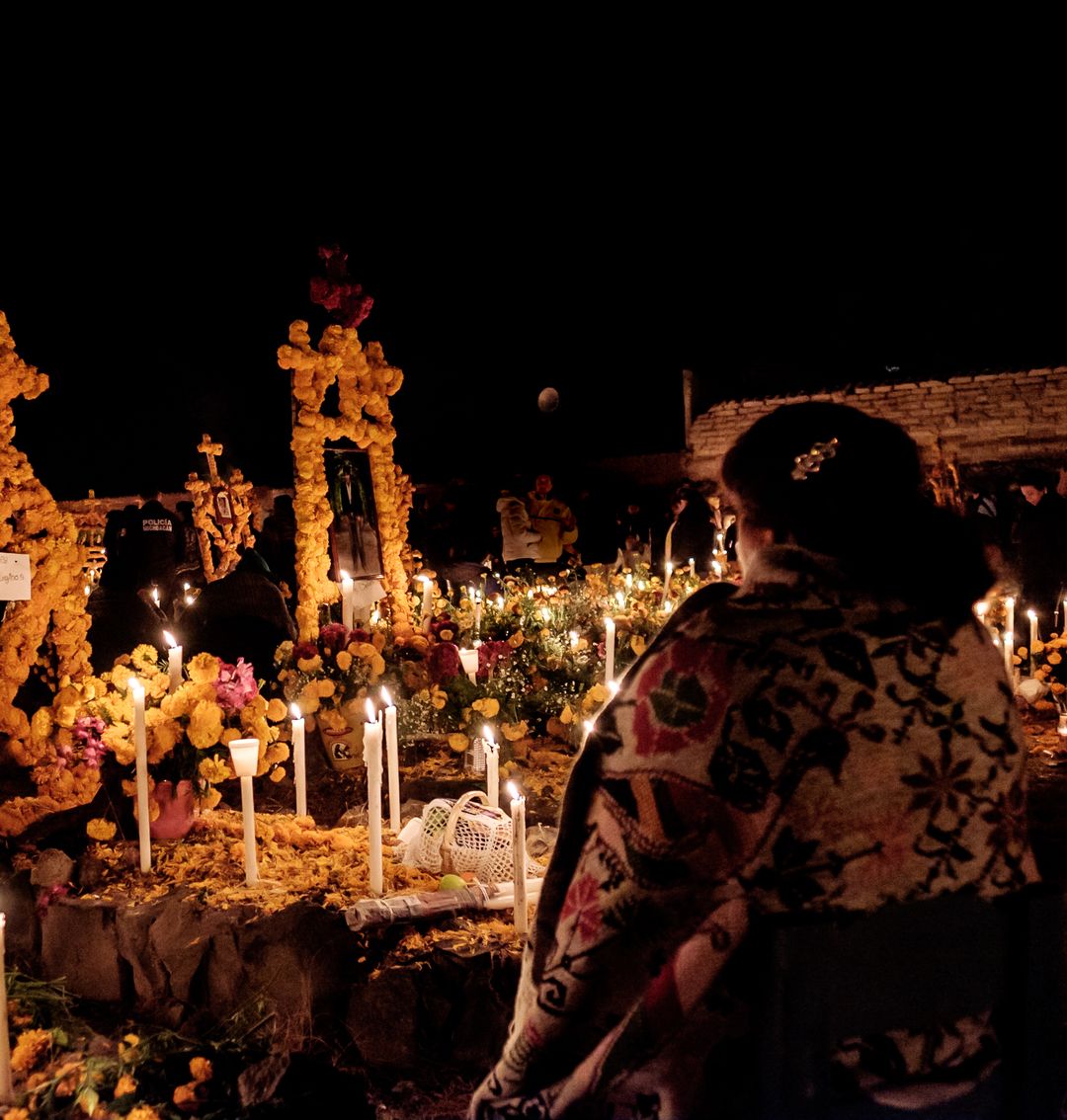
A woman in an embroidered shawl, seen from behind, watches over graves lit by candles and dressed in marigolds in the churchyard of Arocutin.

Arocutin

A P'urhépecha village of about seven hundred people, thirty minutes west of Pátzcuaro. The cemetery sits inside the churchyard of Nuestra Señora de la Natividad, and every grave is dug straight into the earth. We arrived close to midnight.

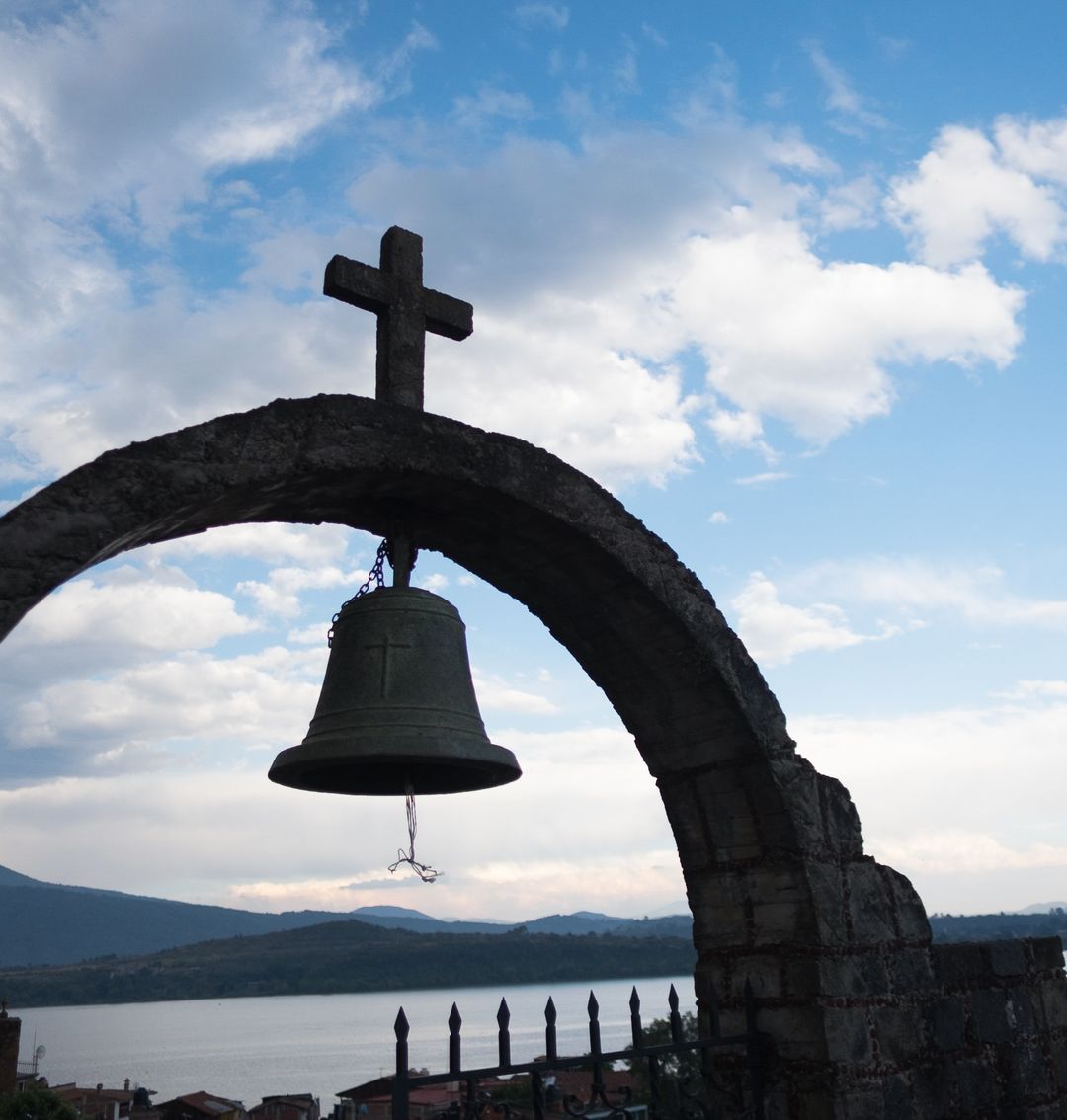
A bell hangs in a stone arch topped by a cross, with Lake Pátzcuaro and the far shore behind.

Janitzio

The island, the next afternoon. You take a ferry over, and fishermen come up to the boat. The town builds straight up from the water, stairs all the way, and near the top a ledge looks out over the whole valley. A cloudy day, with the sun bursting through.

Ánimas

One Night,
Many Shores

The towns around the lake each keep their own traditions for Día de los Muertos. A little different, and the same in so many ways.

Twenty-five cemeteries kept the vigil in 2015. A year later, we stood in one.

Tap a town.

La Otra LadoVelación
para
Someone you carry
de
You
cuándo
November 1 and 2
dónde
Wherever you are
trae
Their photograph, their food, one candle
Keep the lightuntil morning

An invitation, not a ticket.

We left quietly, before morning, with every candle still burning. Ten years on, I have not been back. I am still carrying the light.

The night is one of fifteen days.

See all 117 frames on Lightroom
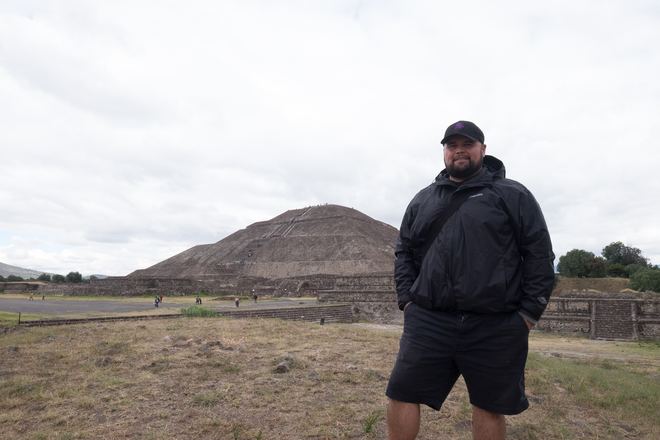
A man in a dark jacket and cap stands in front of a pyramid at Teotihuacán under a pale sky.
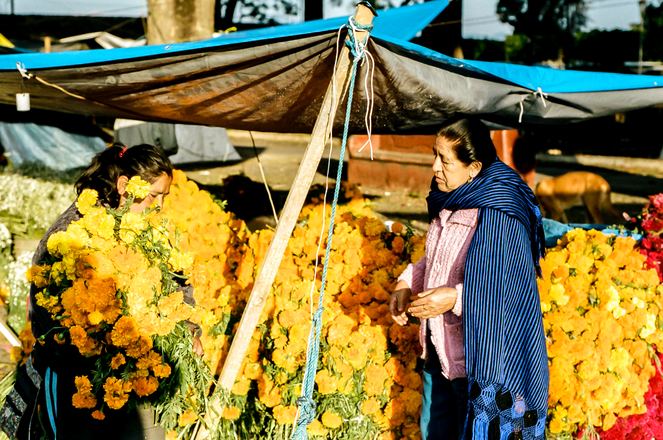
A woman in a dark blue rebozo at a market stall piled with cempasúchil in Pátzcuaro, photographed on film.
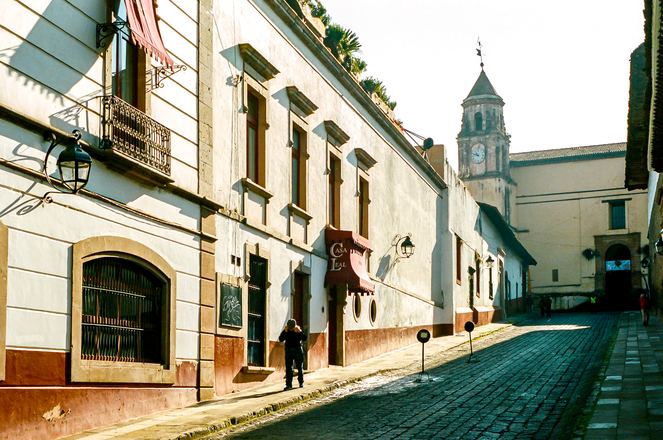
A cobbled street between white walls with deep red bases, a church clock tower at its end, in low sun. Photographed on film.
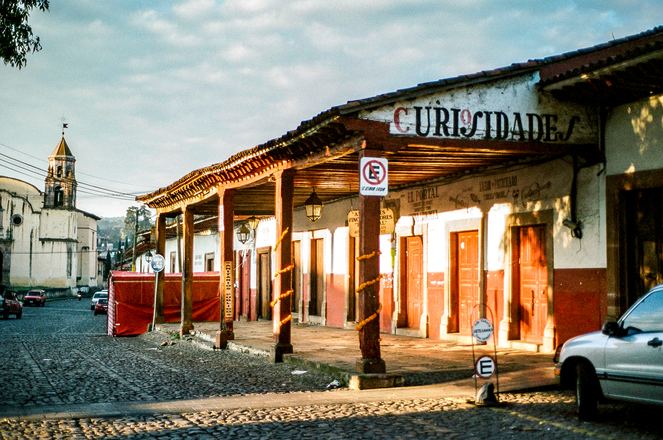
A wooden arcade along a white and red building. CURIOSIDADES is hand-painted above it in black, with a red first letter. Photographed on film.
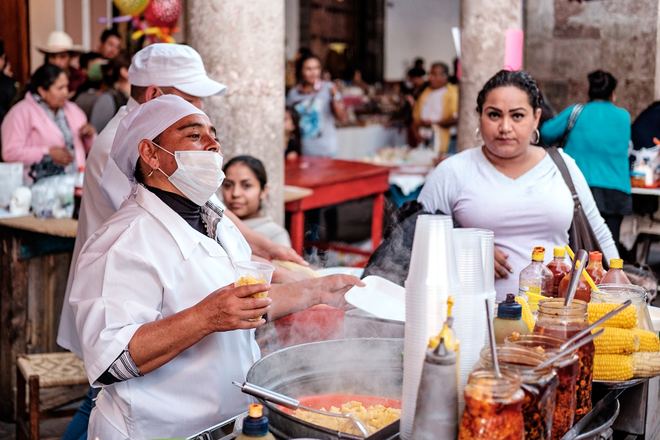
A cook in a white cap and face mask works a steaming food stand while a customer waits.
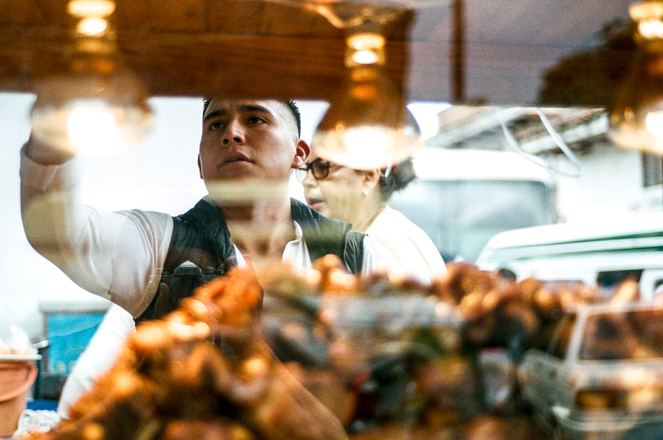
A young man at a food stand under copper lamps in Santa Clara de Cobre, photographed on film through glass.
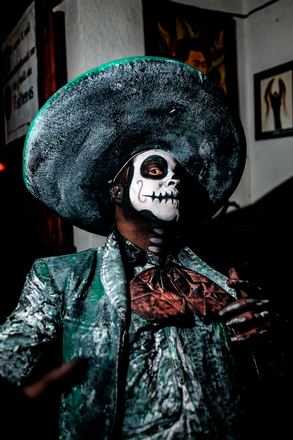
A catrín in a wide sombrero and skull makeup at the mezcal bar in Pátzcuaro.
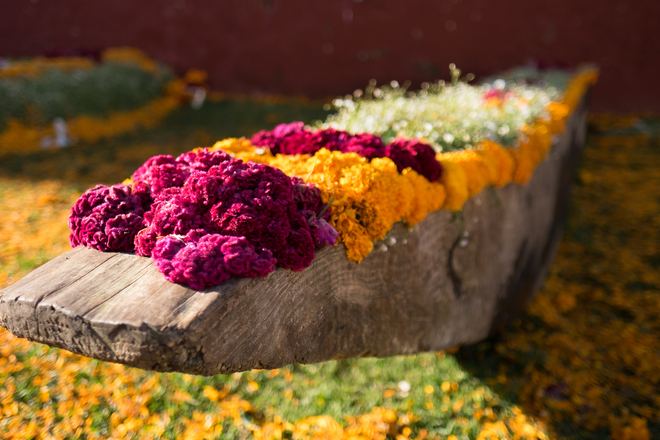
A wooden canoe filled with magenta cockscomb and marigolds, resting on a carpet of marigold petals.
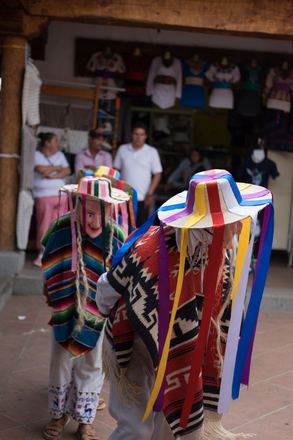
Two masked dancers in sarapes and wide hats hung with coloured ribbons bend forward under an arcade.
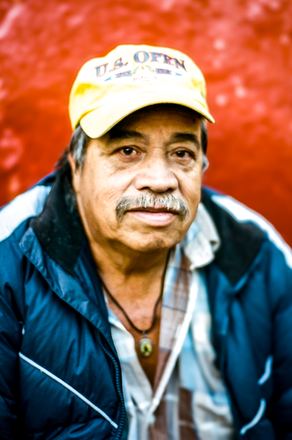
A man in a yellow cap and a blue jacket in front of a red wall, photographed on film.
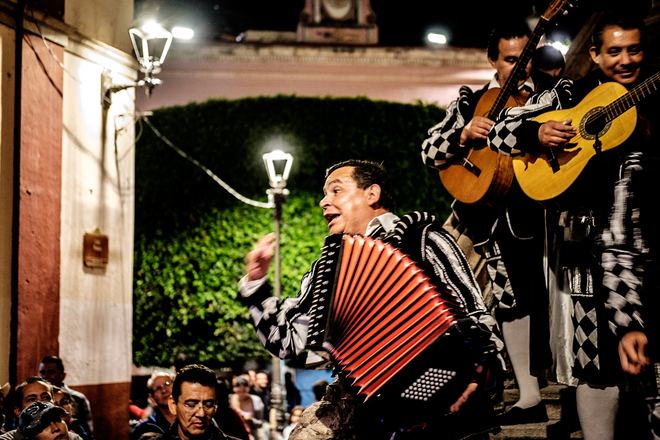
Street musicians in checked costumes play accordion and guitars at night in Guanajuato.
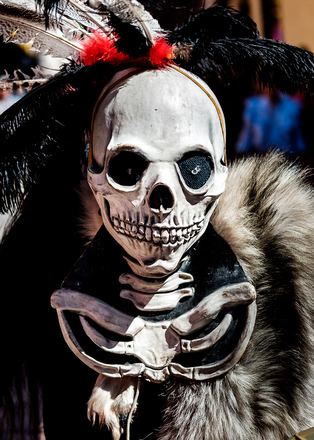
A dancer in a skull mask, feathers and fur in a procession in San Miguel de Allende.
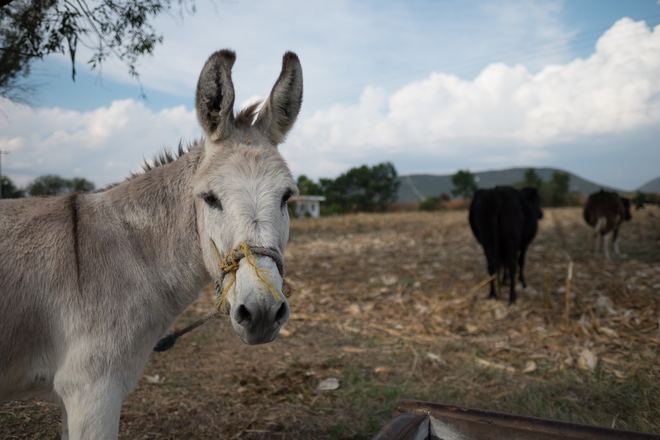
A grey donkey looks into the lens in a dry field, cattle behind it, at the rancho near Irapuato.
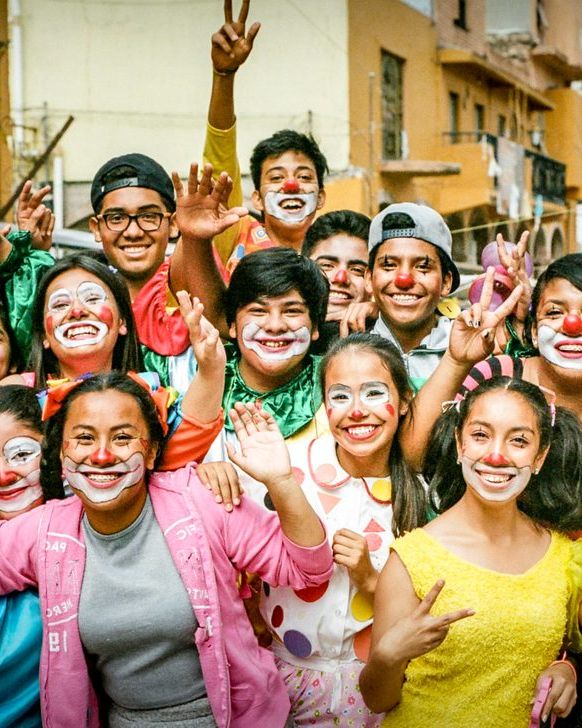
Students in clown costumes and face paint wave at the camera in Abasolo, photographed on film.